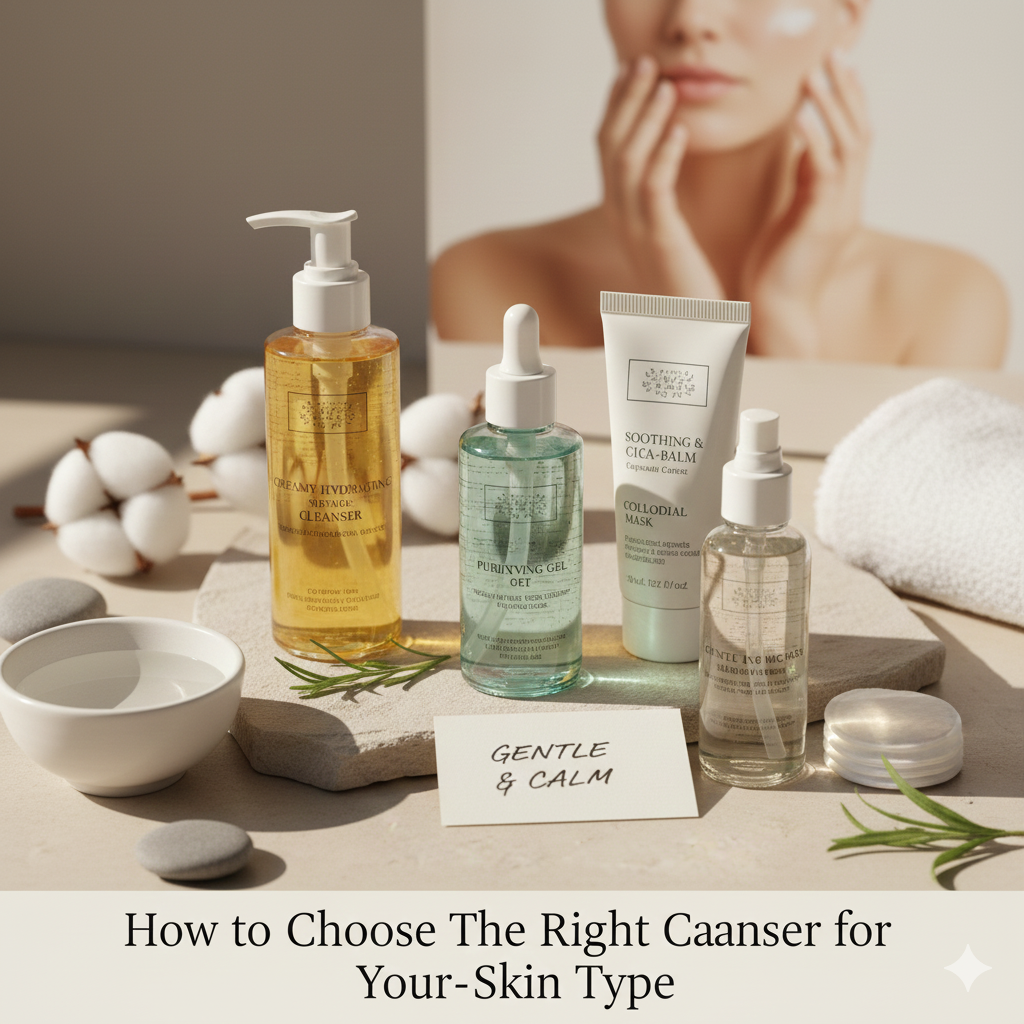
How to Choose the Right Cleanser for Your Skin Type
Cleansing is the first — and often most overlooked — step in any skincare routine. The right cleanser can set the stage for glowing, healthy skin, while the wrong one can cause irritation, dryness, or breakouts.
But with hundreds of options on the market, from gel cleansers to micellar waters, it’s easy to get lost. This guide will help you understand how to choose the right cleanser for your skin type, so your skincare routine works with your skin, not against it.
Why Choosing the Right Cleanser Matters
A proper cleanser does more than just remove dirt and makeup. It also:
- Balances your skin’s pH (ideally around 5.5).
- Prepares your skin to absorb serums and moisturizers.
- Prevents barrier damage and dehydration.
Using the wrong cleanser can strip your natural oils, disrupt the barrier, and trigger overproduction of sebum — leading to breakouts or dullness.
Step 1: Identify Your Skin Type
Before you can pick a cleanser, you need to know your skin type.
Here’s a quick breakdown:
- Dry skin: Feels tight after washing, prone to flaking.
- Oily skin: Shiny within hours, enlarged pores.
- Combination skin: Oily in T-zone, dry on cheeks.
- Sensitive skin: Easily irritated, reacts to fragrance or strong actives.
- Normal skin: Balanced, few visible issues.
💡 Tip: Try the “bare-face test” — wash your face with a mild cleanser, wait 30 minutes, and observe. Tightness = dry; shine = oily.
Step 2: Choose the Texture That Matches Your Skin
Each skin type benefits from a specific cleanser texture. Here’s what works best:
1. For Dry Skin
Opt for cream, milk, or balm cleansers.
These are rich in emollients and help retain moisture.
Look for ingredients like:
- Glycerin
- Ceramides
- Shea butter
- Squalane
Avoid foaming or gel cleansers — they can over-strip your skin.
2. For Oily or Acne-Prone Skin
Choose gel or foam cleansers that gently remove excess oil without drying.
Key ingredients:
- Salicylic acid (BHA) – unclogs pores.
- Niacinamide – regulates sebum.
- Tea tree oil – antibacterial and calming.
Avoid heavy or creamy textures that might clog pores.
3. For Combination Skin
You need balance — a light gel-cream cleanser that cleanses the T-zone but keeps cheeks hydrated.
Look for:
- Aloe vera
- Green tea extract
- Hyaluronic acid
You can also try double cleansing: an oil-based cleanser first, followed by a gentle foam.
4. For Sensitive Skin
Your focus should be minimal irritation.
Go for fragrance-free, non-foaming cleansers with:
- Panthenol (B5)
- Centella Asiatica
- Allantoin
- Oat extract
Avoid alcohol, essential oils, and sulfates like SLS/SLES.
5. For Normal Skin
Lucky you — your skin can handle most cleansers.
Choose a mild gel or cream cleanser with a balanced pH and hydrating agents like glycerin or amino acids to maintain skin health.
Step 3: Check the pH Level
Many people overlook this, but pH balance is crucial.
A cleanser that’s too alkaline (above pH 7) can weaken your barrier and lead to dryness or sensitivity.
Look for cleansers labeled “pH-balanced” or test them with pH strips — the ideal level is 5–5.5.
Step 4: Avoid Common Cleansing Mistakes
Even the best cleanser can cause issues if you misuse it. Avoid these pitfalls:
- Over-cleansing – twice a day is enough.
- Using hot water – it strips your natural oils.
- Scrubbing too hard – leads to microtears and irritation.
- Skipping hydration – always follow with moisturizer.
Gentle, consistent cleansing keeps your barrier strong and balanced.
Step 5: Consider Double Cleansing
If you wear makeup or sunscreen daily, double cleansing can be a game-changer.
- Start with an oil-based cleanser or micellar water to dissolve makeup.
- Follow with a water-based cleanser that suits your skin type.
This method ensures deep cleansing without irritation — especially useful for oily or combination skin.
Recommended Cleanser Types
Here are some dermatologist-approved examples (you can use any similar ones):
- Dry skin: CeraVe Hydrating Cleanser, The Inkey List Oat Cleansing Balm
- Oily skin: La Roche-Posay Effaclar Purifying Gel, COSRX Low pH Good Morning Gel
- Sensitive skin: Avene Tolerance Extremely Gentle Cleanser, Vanicream Gentle Facial Cleanser
- Combination skin: KraveBeauty Matcha Hemp Cleanser, Simple Kind to Skin Refreshing Gel Wash
Step 6: Listen to Your Skin
After introducing a new cleanser, watch how your skin reacts over a week.
If you notice tightness, redness, or new breakouts, it’s likely too harsh.
The ideal cleanser should leave your skin comfortable and refreshed, not squeaky-clean or greasy.
Conclusion
The perfect cleanser doesn’t just remove dirt — it maintains your skin’s health, barrier, and balance.
When chosen correctly, cleansing becomes the foundation of your entire skincare routine, enhancing the effect of every other product you use.
Take your time to find what works best — your skin will thank you with a clear, radiant glow. 🌿