How to Rebuild Your Skin Barrier After Over-Exfoliation
Introduction
If your skin suddenly feels tight, red, and irritated, it might be more than just sensitivity — your skin barrier could be compromised. Over-exfoliation is one of the most common causes of barrier damage today. From harsh acids to daily scrubs, our quest for glowing skin often backfires, leaving the protective layer stripped and inflamed.
But here’s the good news — your skin can heal. With the right products and approach, you can rebuild your skin barrierand restore its natural strength and radiance.
What Happens When You Over-Exfoliate
The skin barrier — also known as the stratum corneum — acts as your body’s first line of defense against pollution, bacteria, and moisture loss. When exfoliated too aggressively, this layer becomes weakened, leading to:
- Burning or stinging sensations
- Excessive dryness or flaking
- Increased breakouts or redness
- Sensitivity to even gentle products
Once this happens, even your favorite moisturizer or cleanser might suddenly feel “wrong.” Your skin needs time and the right care to repair itself.
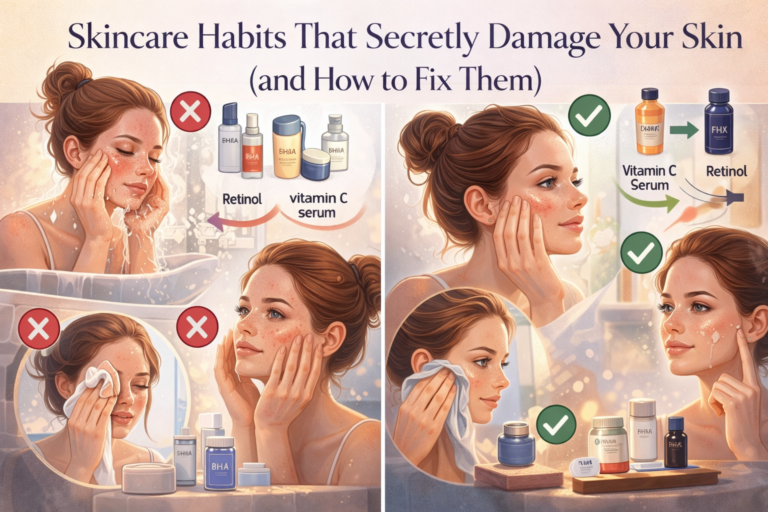
Step 1: Stop All Exfoliants and Active Ingredients
The first rule of recovery: give your skin a break.
Stop using AHAs, BHAs, PHAs, retinoids, or vitamin C for at least 7–10 days. This allows the barrier to start rebuilding without further irritation. Stick to the simplest possible routine: cleanser, moisturizer, and sunscreen.
Avoid:
- Scrubs and peeling gels
- Toners with alcohol
- Foaming cleansers with sulfates
Keep everything gentle and fragrance-free.
Step 2: Simplify Your Routine
When your skin is compromised, less is more. Focus on hydration and repair, using only a few essential products.
Example routine:
- Cleanser: Cream or milk-based, pH-balanced (around 5.5).
- Moisturizer: Containing ceramides, cholesterol, and fatty acids.
- Sunscreen: Broad-spectrum SPF 30+ with mineral filters (zinc oxide, titanium dioxide).
Consistency is key — avoid changing products too often during recovery.
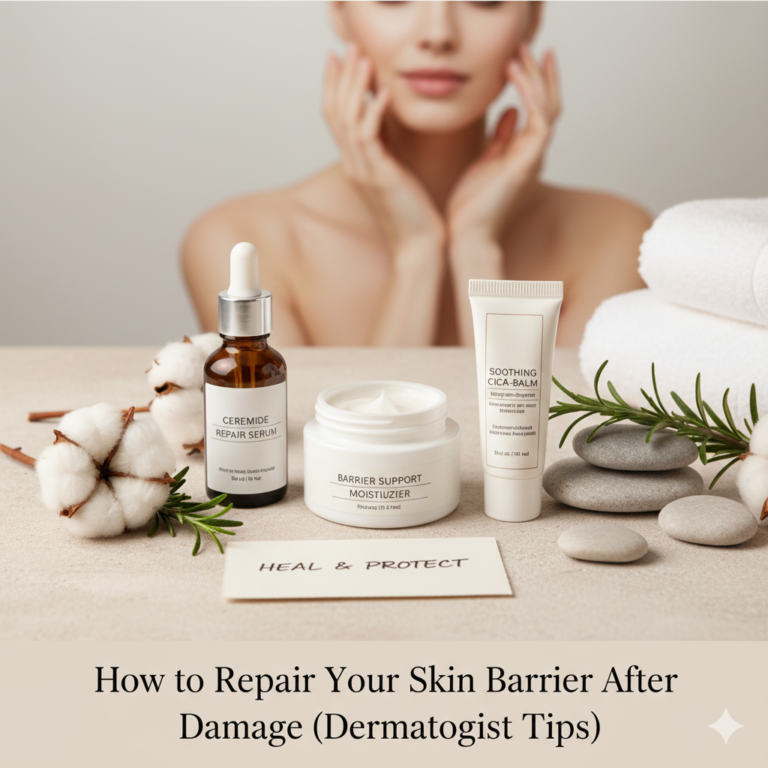
Step 3: Use Barrier-Repair Ingredients
Look for ingredients that mimic or replenish your skin’s natural lipids. These are scientifically proven to restore barrier function:
- Ceramides – strengthen the protective layer and retain moisture.
- Niacinamide (Vitamin B3) – reduces inflammation and boosts ceramide production.
- Panthenol (Pro-Vitamin B5) – soothes and accelerates healing.
- Squalane – provides lightweight nourishment without clogging pores.
- Centella Asiatica – calms redness and supports collagen synthesis.
💡 Tip: Choose moisturizers that contain multiple of these ingredients. Layering a hydrating serum under your cream can further enhance recovery.
Step 4: Keep Your Skin Hydrated
A damaged barrier struggles to hold water, leading to dehydration and discomfort.
To help restore balance:
- Apply a hydrating toner or essence with hyaluronic acid or glycerin.
- Follow up with an occlusive layer (like petrolatum or balm) at night to “seal in” moisture.
- Avoid long, hot showers and overly dry environments.
Hydration is the foundation of recovery — it keeps your cells plump and supports regeneration.
Step 5: Protect from UV and Environmental Stress
Sun exposure worsens barrier damage and delays healing.
Use a gentle, mineral sunscreen every day, even indoors. Look for formulas labeled “for sensitive skin” or “post-procedure.”
Also, avoid wind, extreme cold, or pollution-heavy environments when possible — or use a barrier balm as an extra layer of protection.
Step 6: Reintroduce Actives Slowly
Once your skin feels calm and healthy again (usually after 2–3 weeks), you can gradually reintroduce exfoliants — but in moderation:
- Start with 1× per week exfoliation.
- Use mild acids like lactic acid or PHA.
- Always follow with a rich moisturizer.
If any irritation returns, stop and wait a few more days before trying again.
Dermatologist-Approved Barrier Repair Products
Here are a few dermatologist-recommended product types that are great for recovery (use generic equivalents or similar formulations):
- Cleansers: CeraVe Hydrating Cleanser, La Roche-Posay Toleriane Dermo-Cleanser
- Moisturizers: Eucerin Advanced Repair, CeraVe Moisturizing Cream, Avene Cicalfate+
- Barrier Balms: Aquaphor Healing Ointment, La Roche-Posay Cicaplast Baume B5
- Serums: The Ordinary Niacinamide 10% + Zinc, Vichy Minéral 89
These support healing without clogging pores or causing further irritation.
When to See a Dermatologist
If your skin remains red, flaky, or sore after several weeks, it might indicate contact dermatitis, eczema, or another underlying issue. A dermatologist can recommend topical steroids or barrier-repair treatments tailored to your skin type.
Conclusion
Over-exfoliation is a common mistake, but your skin is resilient.
By simplifying your routine, focusing on hydration, and using the right barrier-supporting ingredients, you can fully restore your complexion’s strength and glow. Patience and consistency will bring visible results — your skin just needs time to rebuild its natural defenses.