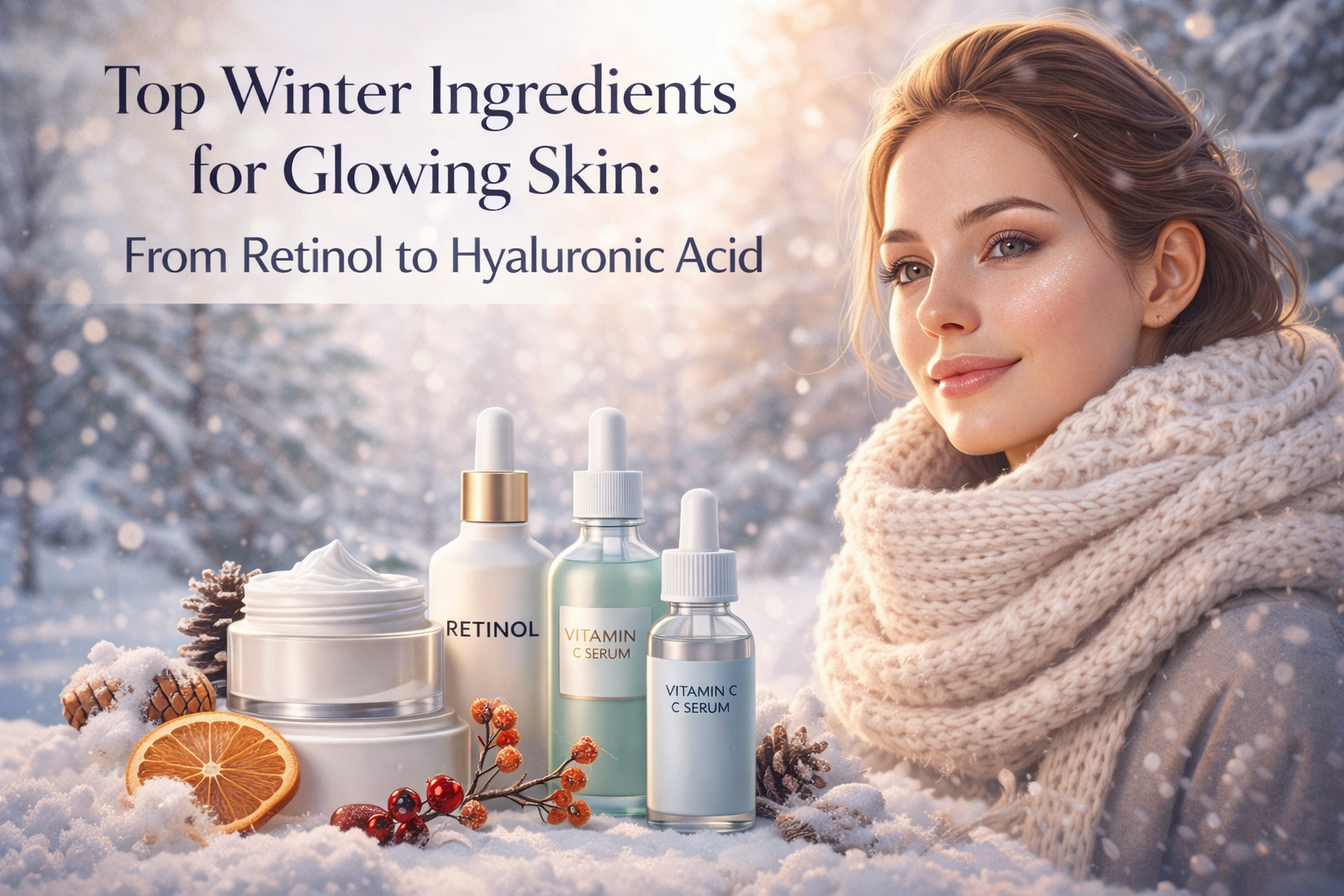
Top Winter Ingredients for Glowing Skin: From Retinol to Hyaluronic Acid
Winter can be harsh on your skin. Cold air, indoor heating, and holiday stress can leave your skin dry, dull, and sensitive. Using the right skincare ingredients during winter is essential to maintain a glowing complexion, protect the skin barrier, and prevent seasonal damage. In this guide, we’ll cover the top winter-friendly ingredients, how to use them, and tips for layering them effectively for maximum results.
1. Hyaluronic Acid
Benefits
Hyaluronic acid (HA) is a superstar humectant that attracts and retains water in the skin. It provides deep hydration, plumps fine lines, and improves elasticity. HA works well in winter, when dry air can rapidly dehydrate skin.
For detailed guidance on HA serums, see Hyaluronic Acid for Deep Hydration
Pairing with moisturizers enhances results and prevents winter dryness.
Usage Tips
- Apply on damp skin after cleansing.
- Layer under a moisturizer to lock in hydration.
- Can be used morning and night safely.
2. Niacinamide
Benefits
Niacinamide (Vitamin B3) soothes irritation, strengthens the skin barrier, and improves skin texture. It’s gentle enough for sensitive winter skin and helps reduce redness from cold exposure.
Learn more about using niacinamide with other winter actives: Niacinamide for Glowing Skin
Usage Tips
- Start with 2–5% concentrations if new to niacinamide.
- Can be layered with HA or light moisturizers.
- Safe for daily use, even under makeup for parties.
3. Retinol
Benefits
Retinol supports collagen production, improves skin texture, and helps fade pigmentation. In winter, it can be safely used with richer moisturizers to prevent dryness.
For layering retinol with other actives, see: The Ultimate Guide to Retinol
Usage Tips
- Start with 0.1–0.3% concentrations if new.
- Apply at night and follow with a rich moisturizer.
- Limit initial use to 2–3 nights per week, gradually increasing.
4. Ceramides
Benefits
Ceramides restore the skin barrier, preventing water loss and protecting against cold weather irritation. They are ideal for dry and sensitive winter skin.
Usage Tips
- Use in creams, moisturizers, or serums.
- Combine with HA or niacinamide for synergistic hydration.
5. Squalane and Natural Oils
Benefits
Squalane, argan oil, and jojoba oil provide occlusive hydration that seals in moisture. These ingredients help combat winter dryness and add a natural glow.
Usage Tips
- Apply after serums but before heavier creams.
- Can also be added to foundation for a dewy finish in winter makeup.
6. Antioxidants
Benefits
Vitamin C, vitamin E, and ferulic acid protect the skin from environmental stressors and free radicals. Winter air can be dry and polluted, making antioxidants crucial for glowing skin.
Usage Tips
- Use in the morning under SPF.
- Pair with moisturizing serums to prevent irritation.
7. Gentle Acids for Winter Exfoliation
Benefits
Chemical exfoliants like AHAs and PHAs remove dead skin cells, improve texture, and enhance product absorption. Winter requires gentler exfoliation to prevent barrier damage.
For safe exfoliation tips in winter, see: Exfoliating Acids: AHA vs. BHA vs. PH
Usage Tips
- Limit use to 1–2 times per week for sensitive skin.
- Always follow with hydration and SPF during daytime.
How to Layer Winter Skincare Ingredients
- Cleanser: Start with a gentle, hydrating cleanser.
- Hydrating Serum: Apply HA or niacinamide on slightly damp skin.
- Treatment Serum: Apply retinol at night, or antioxidant serums in the morning.
- Moisturizer: Use ceramide-rich creams to lock in hydration.
- Oil or Squalane: Optional for extra occlusion.
- Sunscreen: Essential for daytime, even in winter.
For full winter skincare routine, see: Winter Skincare Routine: How to Protect and Hydrate Your Skin
Recommended Winter Skincare Products
- Hyaluronic Acid Serums: Lightweight hydration boosters.
- Niacinamide Serums: Calm irritation and strengthen the barrier.
- Retinol Creams: Anti-aging and texture improvement.
- Ceramide Moisturizers: Seal moisture and protect skin.
- Oils: Squalane or argan oil for occlusion.
- Antioxidant Serums: Vitamin C or E for environmental protection.
Internal Links for Skincare Routine Enhancement
- Hyaluronic Acid for Deep Hydration – deep hydration in winter.
- Niacinamide for Glowing Skin – soothing and barrier support.
- The Ultimate Guide to Retinol – anti-aging treatments for winter.
- Exfoliating Acids: AHA vs. BHA vs. PHA – gentle winter exfoliation.
- Winter Skincare Routine: How to Protect and Hydrate Your Skin – complete seasonal routine.
Key Takeaways
Winter skincare requires a thoughtful combination of hydration, barrier protection, and active ingredients. Using hyaluronic acid, niacinamide, retinol, ceramides, squalane, and antioxidants ensures your skin stays healthy, resilient, and glowing throughout the cold season. Layering products correctly and practicing moderation with exfoliation prevents dryness and irritation, allowing you to enjoy winter without compromising skin health.