Skin Cycling: How to Build a 4-Night Routine That Actually Works
Skin Cycling: How to Build a 4-Night Routine That Actually Works
Skin cycling — the method of rotating powerful actives with recovery nights — has become a go-to strategy for people who want visible results from retinoids, acids and exfoliants without constant irritation. Dermatologists and skincare pros use the same logic: deliver targeted treatments, then give the skin time to repair.
If you’re tired of redness, flaking, or stalled progress from over-using actives, this step-by-step guide will teach you how to set up a practical 4-night skin cycling routine, choose the right products for your skin type, and measure results safely.
What is skin cycling?
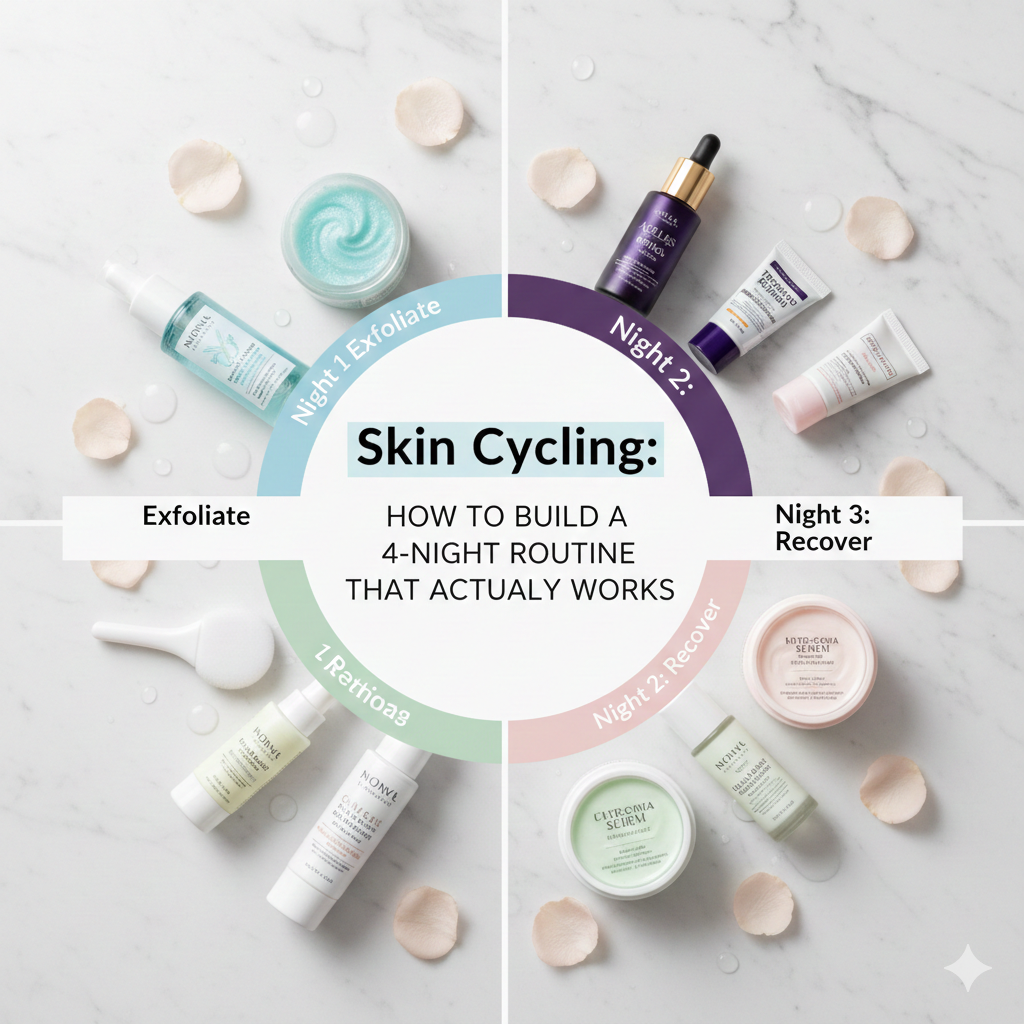
At its simplest, skin cycling alternates nights of active treatment with nights focused on hydration and barrier repair. The classic model is:
- Night 1: Retinoid (treatment night)
- Night 2: Hydration + repair (recovery night)
- Night 3: Exfoliating acid (AHA/BHA) or other active (treatment night)
- Night 4: Hydration + repair (recovery night)
Then repeat. This pattern reduces cumulative irritation while still providing enough exposure to actives for real improvement over time.
Why it works: the science in short
Powerful actives such as retinoids and AHAs/BHAs increase cell turnover and collagen synthesis. But they can also disrupt the skin barrier if used too frequently. Recovery nights allow:
- Barrier lipids to rebuild (ceramides, cholesterol, fatty acids)
- Inflammation to subside so treatments can keep working
- Moisture to be restored, reducing peeling and sensitivity
It’s a balance of stimulate — repair — stimulate — repair.
If you’ve been struggling with irritation from daily retinol or daily acids, skin cycling offers a sustainable path forward.
Who should try skin cycling?
This approach is ideal if you:
- Are new to strong actives (retinol, prescription retinoids, glycolic acid)
- Have experienced retinoid purging or frequent flaking
- Want to combine retinoids and acids without layering them together
- Prefer a minimal hands-on routine with predictable recovery
If you have severe rosacea, eczema, or an active dermatitis, consult a dermatologist before starting. For moderate sensitivity, see our guide on how to repair a damaged skin barrier for steps to prepare first. (See: How to Repair a Damaged Skin Barrier.)
Step-by-step: Build your 4-night skin cycle
Step 1 — Cleanse gently every night
Use a low-pH, non-stripping cleanser. Avoid hot water and harsh scrubs. You want a clean canvas, not a raw one.
Good picks: gentle gel or cream cleansers with glycerin or panthenol. (Related: How to Choose the Right Cleanser for Your Skin Type.)
Step 2 — Night 1: Retinoid treatment
- Apply a pea-sized amount of your retinol/retinoid on dry skin.
- Start with low frequency (once per week) and increase to Night 1 every week-cycle as tolerated.
- If new to retinol, consider bakuchiol as a gentler alternative.
Tip: Buffer with a light moisturizer if you feel stinging. See our retinol introduction guide for more. (See: Essential Nighttime Skincare Routine.)
Step 3 — Night 2: Recovery & hydrate
- Use a hyaluronic acid serum (on damp skin) and a ceramide-rich moisturizer.
- Add a calming ingredient like centella asiatica or panthenol.
- Optional: light occlusive (squalane or petrolatum) in very dry climates.
Step 4 — Night 3: Acid/exfoliation night
- Use either a BHA (salicylic acid) if acne/congestion is your concern, or an AHA (lactic/glycolic) for texture and brightening.
- Keep concentration moderate: e.g., 5–10% lactic acid or 1–2% salicylic acid.
- Apply to clean, dry skin; then follow with a hydrating moisturizer.
Don’t layer acids and retinoids on the same night — that’s the core of the skin cycling advantage.
Step 5 — Night 4: Another recovery night
- Repeat Night 2 routine: hydration, neutral peptides, barrier support.
- Consider adding a gentle antioxidant serum if tolerated (niacinamide is excellent here).
How to tailor the cycle by skin type
Oily / acne-prone: Use BHA on Night 3. Lightweight gel moisturizers on recovery nights help prevent congestion. Pair Night 1 retinoid with an oil-free moisturizer.
Dry / dehydrated: Lower retinol frequency, focus recovery nights on occlusive locks (squalane/petrolatum) and richer creams.
Sensitive: Start with longer recovery (e.g., 5–6 nights between retinoid exposures). Use PHAs (gentler acids) instead of AHAs, and choose lower retinol concentrations.
Mature skin: Keep retinoid nights consistent but ensure good hydration and peptides on recovery nights to support collagen.
Troubleshooting common issues
If you get redness or peeling: Reduce retinoid frequency and ensure full recovery nights between treatments. Switch to a gentler retinoid or bakuchiol temporarily.
If you’re not seeing results: Ensure consistency for at least 8–12 weeks. Many users expect overnight change; retinoids and acids need time.
If breakouts worsen: You may be purging (initial clearing) or the exfoliant concentration might be too high. Reduce acid frequency and check for comedogenic products. (Related: Understanding Comedogenic Ratings.)
Example 4-week plan for a beginner
Week 1:
- Mon (Night 1): Retinol (0.25%)
- Tue (Night 2): Hydrate & repair
- Wed (Night 3): PHA (gentle exfoliant)
- Thu (Night 4): Hydrate & repair
- Repeat Fri–Sun as recovery / light hydration only
Gradually increase Week 2→4 by repeating the 4-night cycle as tolerated.
Measuring progress: what to track
- Photos: Take one set of photos each week in consistent lighting.
- Texture: Note reduced roughness, fewer flakes.
- Breakouts: Track frequency & severity (initial purge vs ongoing acne).
- Comfort: If stinging persists >48 hours, reduce active use.
Final tips for long-term success
- Always wear SPF daily — retinoids and acids increase photosensitivity. (See: How to Choose the Right Sunscreen for Your Skin Type
.)
- Be patient: meaningful changes often take 8–12 weeks.
- Use minimal, quality ingredients on recovery nights to support barrier health (ceramides, niacinamide, hyaluronic acid). See our barrier repair guide for more. (See: How to Repair Your Skin Barrier