Post-Winter Skincare Reset: How to Revive Your Skin After the Cold Season
When winter finally ends, your skin often shows the toll of months of cold air, indoor heating, and heavy creams. Dull tone, rough texture, and dryness are common — signs that your skin barrier needs a reset.
A proper post-winter skincare routine can bring back radiance, balance oil production, and prepare your complexion for the warmer spring months.
This guide will help you detox, rehydrate, and revive your skin step by step — so you can start spring with a healthy glow.
Why Your Skin Needs a Reset After Winter
During winter, your skin works overtime to stay hydrated. The cold air outside and heated air indoors strip away moisture, leading to:
- Dehydration and tightness
- Flakiness or dry patches
- Dull, uneven tone
- Weakened barrier and sensitivity
As temperatures rise, those heavy winter creams can start to clog pores. That’s why early spring is the perfect time to rebalance your routine and focus on renewal.
To learn how to protect skin during the cold months, check Winter Skincare Routine: How to Protect and Hydrate Your Skin
Step 1: Exfoliate the Dullness Away
After months of thick moisturizers, dead skin cells tend to accumulate, making your complexion look tired and gray.
Gentle exfoliation is the key to revealing fresh, glowing skin underneath.
Choose the Right Exfoliant
- AHA acids (glycolic, lactic): dissolve dead cells for smoother texture.
- PHA acids: great for sensitive skin; they exfoliate without irritation.
- Enzyme exfoliants: derived from fruit, ideal for dry or fragile skin.
Use them 1–2 times a week to restore radiance and improve absorption of other products.
Read more about acids in Exfoliating Acids: AHA vs. BHA vs. PHA
to find your best option.
Step 2: Focus on Deep Hydration
After exfoliation, your skin is ready to absorb moisture. Winter dehydration can leave your complexion tight and irritated — now’s the time to bring water back.
Best Ingredients for Spring Hydration
- Hyaluronic acid – attracts and retains moisture.
- Panthenol (Pro-vitamin B5) – calms and softens skin.
- Glycerin – creates a smooth, dewy finish.
Layer a hydrating serum under a lightweight cream or gel-based moisturizer to balance water and oil levels.
Learn how to layer skincare properly in How to Layer Skincare Products Correctly.
Step 3: Repair and Strengthen the Skin Barrier
The skin barrier might still be fragile after winter, especially if you’ve experienced flaking or redness. Strengthening it ensures long-term resilience and hydration retention.
Look for:
- Ceramides – rebuild protective lipids.
- Niacinamide – reduces redness, evens out tone.
- Squalane – restores elasticity and prevents moisture loss.
Products with these ingredients are perfect for calming post-winter irritation and preparing your skin for the transition to warmer weather.
See Niacinamide for Glowing Skin
for detailed benefits and how to combine it safely.
Step 4: Add Brightening Ingredients
Winter can leave your complexion dull and uneven. Brightening actives bring back glow and radiance.
Best Options:
- Vitamin C – brightens, protects from free radicals, and boosts collagen.
- Licorice extract – naturally fades dark spots.
- Alpha arbutin – reduces post-acne marks.
Start slowly if you’re new to actives, and apply Vitamin C in the morning before SPF.
Explore Vitamin C for Spring Radiance: Brighten and Protect Your Skin
to get the most from your brightening routine.
Step 5: Lighten Up Your Moisturizer
Thick winter creams can feel too heavy in early spring, leading to clogged pores or excess oil. Switch to a lightweight, non-comedogenic moisturizer.
Ideal textures:
- Gel creams – absorb quickly, great for combination or oily skin.
- Lotion-based moisturizers – hydrating but breathable.
- Water-based formulas – keep your skin fresh all day.
You can still use richer creams at night if your skin feels tight, but daytime formulas should feel airy and non-greasy.
Step 6: Don’t Forget SPF (Even in Early Spring)
Many people forget sunscreen as soon as winter ends — but UV exposure increases rapidly in spring.
Apply broad-spectrum SPF 30+ daily, even when it’s cloudy, to prevent pigmentation and premature aging.
For more on choosing the best SPF, see How to Choose the Right Sunscreen for Your Skin Type
Step 7: Adjust Lifestyle Habits
Skincare alone isn’t enough if your habits don’t support it. To reset your skin from the inside out:
- Drink at least 1.5–2 liters of water daily.
- Add fruits and vegetables rich in antioxidants (berries, citrus, leafy greens).
- Sleep 7–8 hours to allow skin repair.
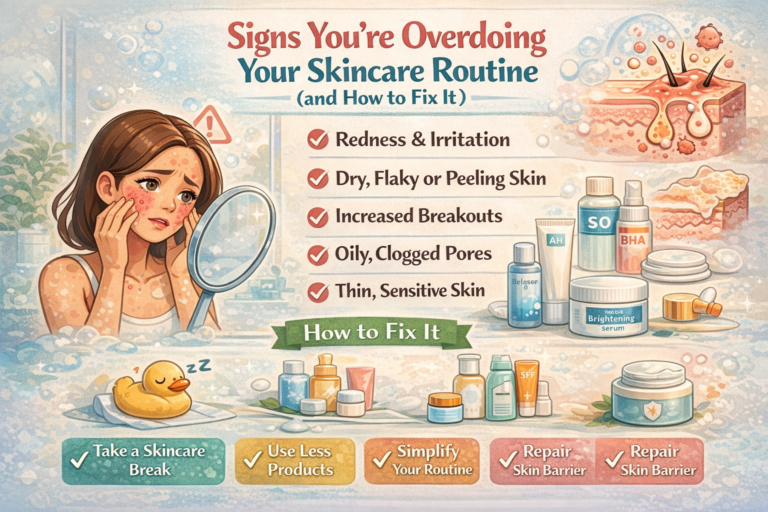
- Avoid overusing retinol or acids during the transition period.
For safe retinol use and combinations, check The Ultimate Guide to Retinol
Step 8: Optional “Skincare Detox Weekend”
Give your skin a break once a week:
- Skip makeup and active ingredients.
- Focus on hydration and gentle cleansing.
- Use a sheet mask or a soothing cream mask.
This “reset weekend” helps your barrier recover and prepares your skin for a consistent spring routine.
If you want a natural approach, read Spring Skincare Detox: Best Ways to Refresh and Purify Your Skin Naturally
Internal Links
- Winter Skincare Routine: How to Protect and Hydrate Your Skin
- Exfoliating Acids: AHA vs. BHA vs. PHA
- Niacinamide for Glowing Skin
- Vitamin C for Spring Radiance: Brighten and Protect Your Skin
- How to Choose the Right Sunscreen for Your Skin Type
- The Ultimate Guide to Retinol
- Spring Skincare Detox: Best Ways to Refresh and Purify Your Skin Naturally
Key Takeaways
- Exfoliate gently to remove dull, dry layers from winter.
- Hydrate deeply with hyaluronic acid and lightweight creams.
- Repair the barrier using ceramides, niacinamide, and squalane.
- Brighten and protect with Vitamin C and daily SPF.
- Transition slowly — replace heavy creams with breathable ones.
Your post-winter skincare reset is about renewal — not overload. With just a few thoughtful changes, you’ll bring your skin back to life and get that healthy, spring-ready glow.