If your skin feels dry, tight, or suddenly reacts to everything — your skin barrier might be damaged.
This delicate outer layer protects you from bacteria, pollution, and moisture loss. When it’s compromised, the result is irritation, sensitivity, and inflammation.
In this article, we’ll explore how to repair your skin barrier fast — using dermatologist-approved methods and product ingredients that truly work.
1. What Is the Skin Barrier and Why It Matters
Your skin barrier — also called the stratum corneum — is made up of lipids, ceramides, and fatty acids.
It acts like a protective wall that keeps hydration in and harmful substances out.
When it’s healthy, your skin looks soft and glowing. When it’s damaged, you’ll notice:
Redness or itching
Tightness and dryness
Flaky or rough texture
Sudden sensitivity to products
2. Common Causes of Barrier Damage
The barrier can break down for many reasons — often from well-intentioned skincare habits:
Over-exfoliating (too frequent acid or scrub use)
Using harsh cleansers that strip natural oils
Mixing too many actives (retinol, AHAs, vitamin C all at once)
Use a thicker occlusive moisturizer — or even a layer of petrolatum (Vaseline) — to seal in hydration. This is known as slugging, and it can dramatically improve recovery overnight.
Large pores can make your skin appear uneven, oily, and textured—leading many people to layer on makeup or use filters to smooth things out. But the truth is: you can minimize their appearance with the right skincare routine and ingredients. While you can’t permanently shrink pores, you can make them look significantly smaller. Here’s how. What Causes Large…
Petroleum jelly, commonly known by the brand name Vaseline, has been a household staple for decades. Its ultra-thick, occlusive nature helps lock in moisture, making it especially appealing to those struggling with dry or irritated skin. But is it actually good to smear Vaseline all over your face before bed? Let’s dive into the science…
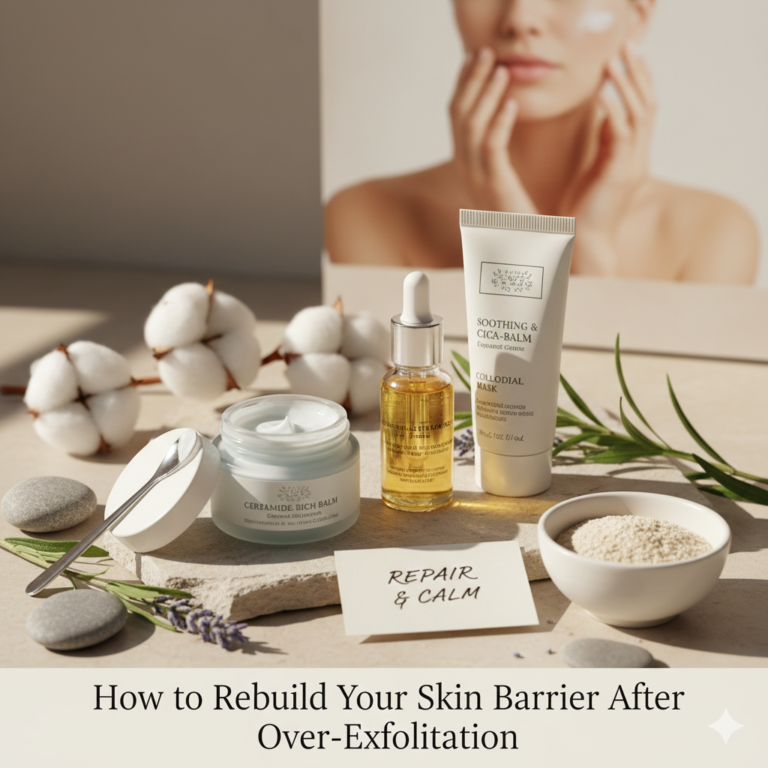
Introduction If your skin suddenly feels tight, red, and irritated, it might be more than just sensitivity — your skin barrier could be compromised. Over-exfoliation is one of the most common causes of barrier damage today. From harsh acids to daily scrubs, our quest for glowing skin often backfires, leaving the protective layer stripped and inflamed. But…
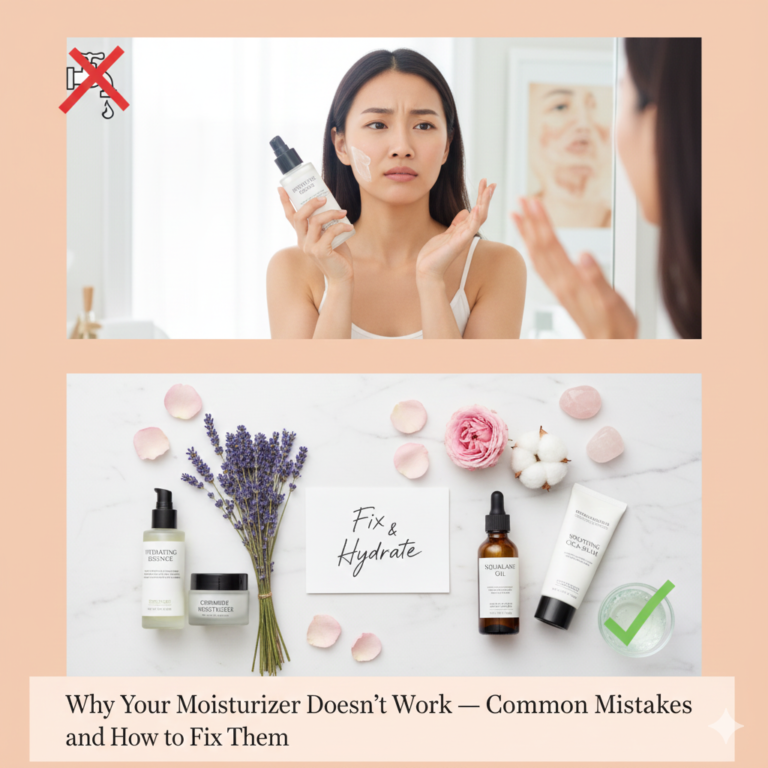
You buy a moisturizer that promises hydration and glow — but your skin still feels dry, tight, or flaky. Sound familiar? The truth is, most people use moisturizers incorrectly, or they pick the wrong type for their skin barrier. If your cream isn’t doing its job, it doesn’t always mean the product is bad. Sometimes, it’s…
Winter holidays are filled with joy, celebrations, and cozy moments — but they also bring cold air, dry indoor heating, and low humidity that can wreak havoc on your skin. The hands and lips are especially vulnerable because they’re constantly exposed to the elements and lack natural oil glands. If you’ve ever struggled with cracked…
Exfoliation is key to healthy, glowing skin—but when your skin is sensitive, it can also be the source of flare-ups, redness, and stinging. The challenge lies in removing dead skin cells without stripping or irritating your already delicate barrier. This article explains how to exfoliate sensitive skin safely and effectively. We’ll cover the best methods,…