How to Know If Your Skin Barrier Is Damaged — and How to Repair It Fast
Your skin barrier is your body’s first line of defense — a thin, invisible wall that keeps moisture in and irritants out.
But harsh products, over-exfoliation, and environmental stress can damage this barrier, leaving your skin dry, red, or inflamed.
If your skin suddenly feels sensitive to everything, from your favorite moisturizer to the air around you, your barrier might be crying for help.
Here’s how to tell — and how to fix it fast.
1. What Exactly Is the Skin Barrier?
Your skin barrier (also called the stratum corneum) is the outermost layer of your skin.
Think of it like a brick wall:
- The bricks are your skin cells.
- The mortar is made up of lipids — ceramides, cholesterol, and fatty acids.
Together, they form a protective shield that:
- Keeps moisture inside
- Blocks bacteria, allergens, and pollution
- Prevents irritation and inflammation
When this wall breaks down, your skin becomes vulnerable — and it shows.
2. Signs Your Skin Barrier Is Damaged
If you notice these symptoms, your skin barrier is likely compromised:
🔹 Redness or irritation after washing or applying skincare
🔹 Tightness or burning even with gentle products
🔹 Flakiness or peeling
🔹 Breakouts that don’t respond to usual treatments
🔹 Sudden sensitivity to sunscreen, makeup, or serums
🔹 Dull, rough texture and loss of glow
💡 Pro tip: If your skin feels dry but looks oily, it might be overproducing oil to compensate for moisture loss — a classic sign of barrier damage.
3. Common Causes of Skin Barrier Damage
Even with the best intentions, daily habits can harm your barrier. The top culprits include:
- Over-exfoliating (using AHAs/BHAs too often)
- Mixing too many actives (retinol + vitamin C + acids)
- Using harsh cleansers that strip natural oils
- Skipping moisturizer
- Cold weather or dry indoor air
- Using very hot water to wash your face
- Stress and lack of sleep
These factors weaken your lipid layer and cause Transepidermal Water Loss (TEWL) — meaning your skin literally leaks moisture.
4. How to Test If Your Skin Barrier Is Damaged
You can try this simple “barrier test” at home:
- Wash your face with a gentle cleanser.
- Pat dry and wait 10 minutes.
- If your skin feels tight, itchy, or uncomfortable — your barrier is likely compromised.
Alternatively, apply a few drops of toner or essence. If it stings or burns, that’s another clear sign.
5. How to Repair a Damaged Skin Barrier (Fast and Safely)
Repairing your barrier is all about simplifying your skincare routine.
You don’t need fancy serums — you need protection, hydration, and patience.
Here’s a dermatologist-approved recovery plan:
Step 1: Strip Back Your Routine
Stop using all strong actives — no acids, no retinoids, no scrubs, no vitamin C.
Keep your routine to just three core products:
- Gentle cleanser
- Moisturizer
- Sunscreen
Focus on hydration and barrier repair only for at least 1–2 weeks.
Step 2: Choose a Gentle Cleanser
Avoid foaming or gel cleansers with sulfates.
Look for formulas labeled “hydrating,” “pH-balanced,” or “for sensitive skin.”
Dermatologists recommend:
- CeraVe Hydrating Cleanser
- La Roche-Posay Toleriane Hydrating Cleanser
- Avene Tolerance Extremely Gentle Cleanser
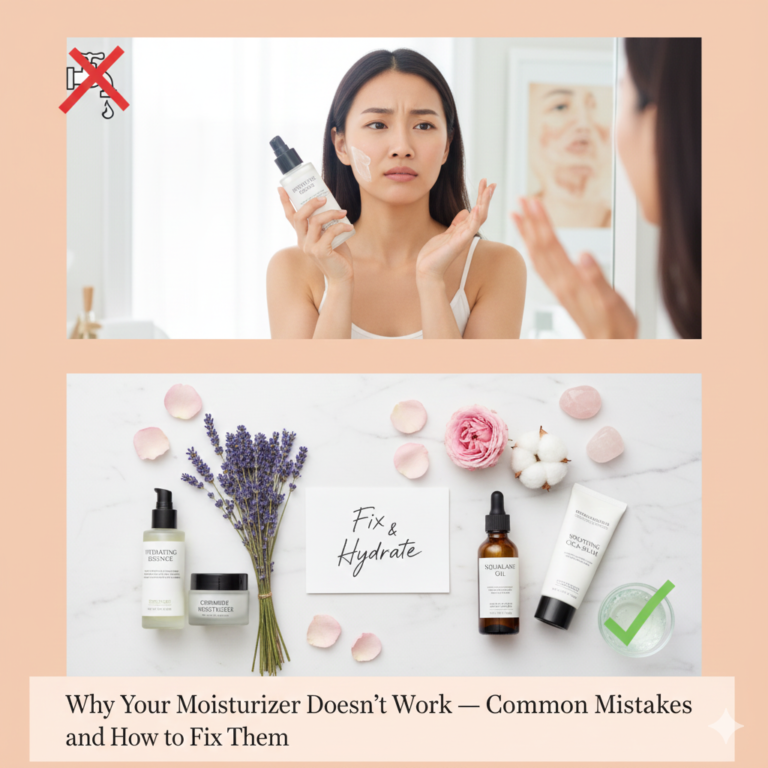
Step 3: Moisturize Like a Pro
Use a rich, barrier-repair moisturizer with:
- Ceramides — to restore lipids
- Hyaluronic acid — to hydrate
- Squalane or panthenol — to soothe and lock in moisture
Apply twice daily and reapply if your skin feels tight.
You can even layer a thin film of petrolatum (Vaseline) at night — a dermatologist trick called slugging — to seal in moisture.
Learn more in our guide:
👉 Hydration vs. Moisturization: What Your Skin Really Needs
Step 4: Protect from the Sun
UV exposure slows healing and breaks down lipids.
Apply broad-spectrum SPF 30 or higher every morning — even indoors.
If sunscreens sting, try mineral (zinc oxide) formulas — they’re gentler.
See:
👉 How to Choose the Right Sunscreen for Your Skin Type
Step 5: Reintroduce Actives Slowly
Once your barrier feels stronger (no redness or tightness), you can reintroduce actives one at a time, with a 3–5 day gap between new products.
Start with niacinamide — it strengthens your barrier and reduces inflammation.
Then, gradually add vitamin C or retinol on alternate nights.
Related:
👉 Can You Use Retinol and Vitamin C Together?
6. How Long Does It Take to Heal?
Minor barrier damage can recover in 3–5 days.
Severe irritation may take 2–4 weeks.
The key is to avoid “over-correcting” — your skin repairs itself best when it’s left alone with supportive products.
If you still experience stinging after a month, consult a dermatologist.
7. The Best Ingredients for Barrier Repair
Look for these ingredients in your routine:
- Ceramides – restore skin’s lipid balance
- Panthenol (B5) – soothes irritation
- Niacinamide – strengthens the barrier
- Squalane – mimics skin’s natural oils
- Centella Asiatica (Cica) – calms redness
- Allantoin – softens rough texture
Avoid alcohol, fragrance, essential oils, and acids until recovery is complete.
8. Daily Routine for Barrier Recovery
Morning:
- Gentle cleanser
- Hydrating toner (optional)
- Ceramide-rich moisturizer
- Mineral sunscreen (SPF 30+)
Evening:
- Cleanser
- Soothing serum (niacinamide or panthenol)
- Moisturizer
- Optional: a thin layer of Vaseline for overnight repair
9. Prevention Tips to Keep It Healthy
Once your skin heals, keep it that way:
✅ Use lukewarm water — never hot.
✅ Limit exfoliation to 1–2 times a week.
✅ Always use sunscreen.
✅ Keep humidity in your room above 40%.
✅ Avoid switching products too often.
Healthy skin looks balanced, hydrated, and comfortable — not shiny or tight.
10. When to See a Dermatologist
If you have persistent redness, peeling, or burning, it may be more than just barrier damage — conditions like rosaceaor eczema can mimic it.
A dermatologist can prescribe healing ointments with ceramides, steroids, or antibiotics if needed.