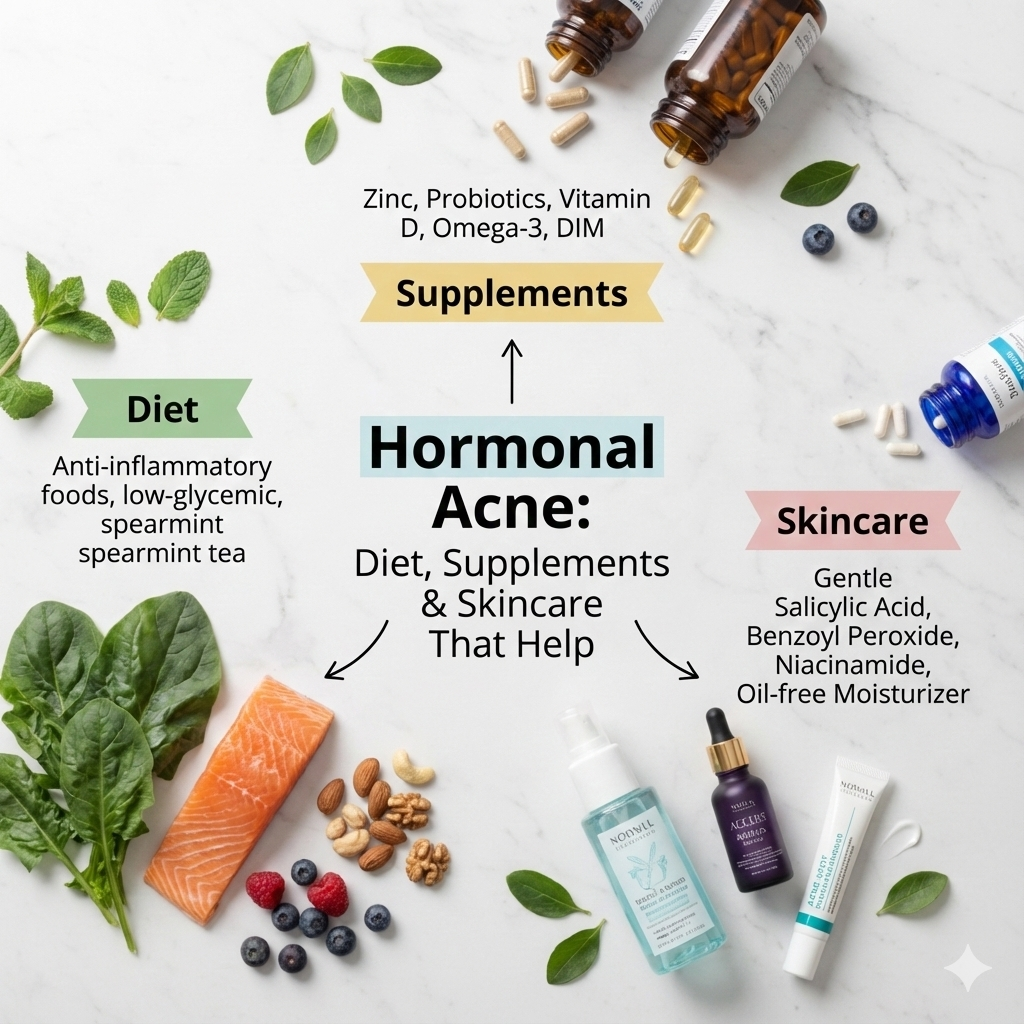
Hormonal Acne: Diet, Supplements & Skincare That Help
Hormonal acne is a frustrating and often stubborn form of acne linked to fluctuations in hormones such as androgens, estrogen, and progesterone. It commonly affects the jawline, chin, and lower face, and can persist into adulthood—even when teenage acne has cleared. Because hormonal acne often stems from internal imbalances, a multi-pronged approach that includes diet, targeted supplements, and smart skincare tends to work best.
This comprehensive guide explains what hormonal acne is, how diet and supplements can help, and which skincare strategies reduce inflammation and prevent breakouts without over-drying or irritating your skin.
What is hormonal acne?
Hormonal acne is acne driven or exacerbated by hormonal fluctuations. Typical triggers include:
- Puberty (natural hormone surge)
- Menstrual cycle and cyclical flares (premenstrual breakouts)
- Polycystic ovary syndrome (PCOS) and endocrine disorders
- Hormonal changes from birth control adjustments or stopping hormonal contraception
- Stress (via cortisol and adrenal hormones)
Clinically, hormonal acne often appears as deep, inflamed cysts and nodules around the lower face, jawline, and neck. It may be painful and leave post-inflammatory hyperpigmentation (PIH) or scarring if not treated correctly.
The role of diet: foods that help vs. foods that harm
Diet won’t cure hormonal acne overnight, but it can significantly influence inflammation, insulin sensitivity, and hormone balance—key drivers behind many adult breakouts.
Foods to limit or avoid
- High-glycemic foods: white bread, sugary snacks, refined carbs. These spike insulin, increasing sebum production and androgen activity.
- Dairy (especially skim milk): some studies link milk to acne flares—likely due to hormones and bioactive molecules in milk. Consider reducing intake for 6–12 weeks and observing changes.
- Excess saturated and trans fats: processed foods and fried items can increase systemic inflammation.
Foods to include
- Low-glycemic whole foods: legumes, whole grains, vegetables — these support stable insulin and reduced sebum production.
- Omega-3 rich foods: fatty fish (salmon, mackerel), flaxseed, chia — anti-inflammatory benefits help calm acne.
- Zinc-rich foods: pumpkin seeds, beef, lentils — zinc plays a role in immune response and sebum regulation.
- Antioxidant-rich produce: colorful fruits and vegetables help neutralize oxidative stress that contributes to inflammation and PIH.
Practical tip: Try a 6–8 week trial of a lower-glycemic diet with limited dairy to evaluate the impact on your breakouts. Pair dietary shifts with skincare changes for best results.
Supplements that may help hormonal acne
Supplements can be supportive when used thoughtfully and ideally under the guidance of a healthcare provider.
1.
Zinc
- Why it helps: Zinc has anti-inflammatory and seboregulating effects.
- Dose: Typical supplemental doses range 15–30 mg/day (check for tolerance, as high doses can cause nausea).
- Note: Zinc may interact with other minerals—take with food and consider cycling.
2.
Omega-3 fatty acids (EPA/DHA)
- Why: Reduce systemic inflammation and may reduce cystic lesions.
- Dose: 1,000–2,000 mg combined EPA/DHA daily from a quality fish oil.
3.
Spearmint or Licorice (for androgen reduction)
- Why: Some herbal agents, like spearmint tea, have anti-androgen effects that can help women with hormonal acne.
- Use: Two cups of spearmint tea daily may provide benefit; discuss with a clinician, especially if you have hormonal conditions.
4.
Inositol (Myo-inositol)
- Why: Often used in PCOS to improve insulin sensitivity and hormone balance—can reduce acne in some PCOS patients.
- Dose: Frequently 2 g twice daily, but follow practitioner advice.
5.
Vitamin D
- Why: Low vitamin D levels are associated with worse acne in some studies. Restoring optimal levels may support immune function.
- Test & dose: Check serum levels and supplement appropriately.
Caveat: Supplements are adjuncts, not cures. Always check interactions (e.g., zinc with antibiotics) and consult a doctor for pregnancy, breastfeeding, or chronic conditions.
Skincare strategy: calming inflammation and regulating oil
Skincare for hormonal acne must balance potency (to treat active lesions) with barrier support (to avoid irritation that can worsen PIH and scarring).
Core principles
- Reduce inflammation — choose calming anti-inflammatory actives and avoid strong irritants.
- Unclog pores — use evidence-backed exfoliants like salicylic acid (BHA) to penetrate sebum and reduce blackheads.
- Support the barrier — hydrators and ceramides minimize irritation from treatments.
- Spot treat wisely — targeted treatments for nodules can reduce severity without overloading the face.
Night & day routine — practical guide
Morning:
- Gentle cleanser (non-stripping)
- Niacinamide serum (2–5%) — reduces sebum, inflammation, and PIH risk
- Lightweight, non-comedogenic moisturizer
- Broad-spectrum sunscreen (non-comedogenic mineral or chemical) — sun protection prevents PIH darkening
Evening:
- Double cleanse if wearing sunscreen/makeup (oil-based first, then gentle cleanser)
- Exfoliation nights: salicylic acid 1–2% (BHA) 2–3x/week for oily/congested skin; PHAs or lactic acid for sensitive types
- Retinoid nights: adapalene 0.1% (OTC) or prescription retinoids for inflammatory acne — start slowly and monitor irritation
- Recovery nights: hyaluronic acid + ceramide-rich moisturizer to repair the barrier
Important: Avoid layering retinoids and strong AHAs/BHAs on the same night—use skin cycling principles to rotate actives and give the barrier time to recover.
Targeted options for stubborn lesions
- Benzoyl peroxide (2.5–5%) as a spot or short-contact therapy: antibacterial against Cutibacterium acnes and reduces inflammation. Alternate with retinoid therapy to avoid irritation.
- Topical antibiotics or azelaic acid (15–20%): azelaic acid is excellent for inflammatory acne and PIH, with a favorable irritation profile and utility in pregnancy (under guidance).
When to seek medical help
Hormonal acne often benefits from medical evaluation, particularly if:
- You have severe cystic acne causing pain or scarring.
- Breakouts persist despite OTC treatments and lifestyle changes.
- You have signs of PCOS (irregular cycles, hirsutism, weight changes).
- You consider oral treatments (birth control, spironolactone, isotretinoin)—these should be managed by a dermatologist or endocrinologist.
Prescription options commonly used: combined oral contraceptives (in women), spironolactone (androgen blocker), low-dose isotretinoin for recalcitrant nodulocystic acne—each has pros/cons and requires medical oversight.
Tracking progress and realistic expectations
Hormonal acne can be slow to respond. Expect:
- Initial improvement in 4–12 weeks with consistent topical therapy and dietary/supplement changes.
- Deeper nodules may take months to resolve.
- Avoid picking—manual manipulation increases scarring and PIH.
Document progress with weekly photos in consistent lighting, and log dietary or supplement changes to identify patterns and triggers.
Practical checklist
- Try a low-glycemic diet and reduce dairy for 6–8 weeks; monitor changes.
- Add omega-3 and zinc (after consulting a clinician).
- Build a skincare routine with: niacinamide AM, sunscreen AM, BHA/retinoid rotation PM, and hydrating recovery nights.
- Consider seeing a dermatologist for prescription therapy if nodules or scarring appear.
Internal links (site integration)
- Makeup for Acne-Prone Skin: How to Achieve a Flawless Look Without Clogging Pores
- Understanding Comedogenic Ratings: What They Mean for Your Skin
- How to Repair Your Skin Barrier: Expert Tips That Actually Work
- How to Treat Acne Scars and Dark Spots Effectively
- Exfoliating Acids: AHA vs. BHA vs. PHA
- Does Sunscreen Cause Breakouts? Here’s What You Need to Know
(Use these links in-body where relevant; they are crafted to match your existing slugs and to maximize topical internal linking across acne, barrier repair, and ingredient guides.)
Conclusion
Hormonal acne demands a thoughtful, multi-layered approach that blends internal and external strategies. Diet and supplements can reduce systemic drivers of inflammation and androgen activity, while a carefully structured skincare routine treats lesions, unclogs pores, and protects the skin barrier. With patience, consistency, and—when needed—medical oversight, hormonal acne is manageable and treatable.