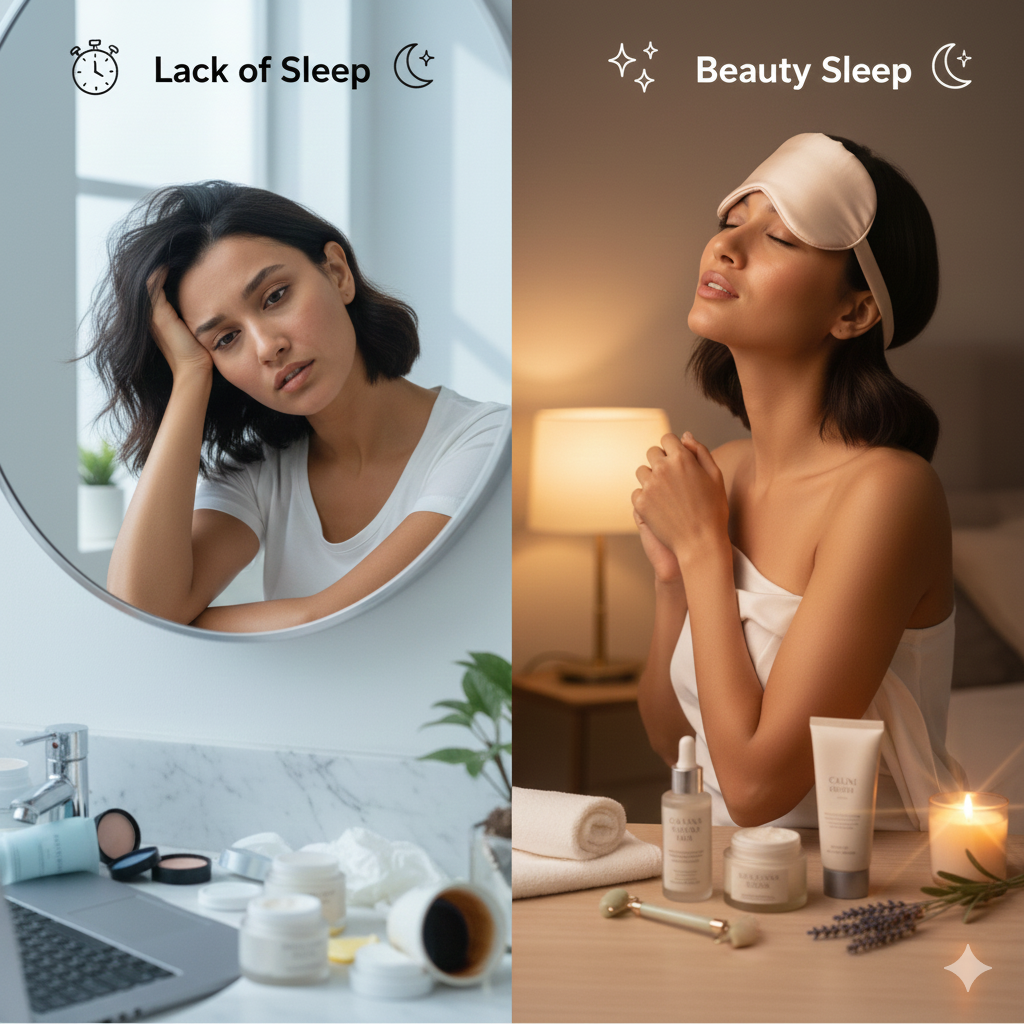
Does Lack of Sleep Ruin Your Skin? The Truth About Beauty Sleep
You’ve probably heard the phrase “beauty sleep” — but it’s more than a catchy saying.
Science now confirms that your skin literally repairs itself while you sleep. When you cut your sleep short, you don’t just feel tired — your skin shows it.
Dark circles, dull tone, breakouts, premature wrinkles — all are visible signs of poor sleep hygiene.
Let’s explore how sleep deprivation affects your skin on a biological level, and how to rebuild your natural glow with simple, proven habits.
1. The Science Behind Beauty Sleep
When you sleep, your body enters a repair and regeneration mode.
During deep sleep, blood flow to the skin increases, collagen is rebuilt, and cellular damage from UV exposure and pollution is repaired.
Here’s what happens during healthy sleep cycles:
- Melatonin (the sleep hormone) neutralizes free radicals and prevents aging.
- Growth hormone peaks, stimulating collagen and elastin production.
- Skin barrier restores its strength, preventing moisture loss.
But when you sleep less than 7 hours, this cycle is disrupted — and your skin starts to age faster.
2. Visible Signs of Sleep Deprivation on Skin
Chronic sleep deprivation affects your skin in several recognizable ways:
1. Dull, Tired-Looking Skin
Without enough rest, blood circulation slows, and oxygen supply to the skin decreases — resulting in a grayish or uneven tone.
2. Puffy Eyes and Dark Circles
Lack of sleep causes fluid retention and poor lymphatic drainage, especially around the eyes.
As blood vessels dilate, dark shadows and puffiness become more noticeable.
3. Premature Wrinkles
When your skin doesn’t get its nightly collagen boost, fine lines deepen faster.
Collagen is the protein responsible for firmness — and it’s mainly produced during deep sleep.
4. Breakouts and Inflammation
Poor sleep raises cortisol, the stress hormone, which increases oil production and inflammation — leading to stress acneand redness.
5. Dryness and Barrier Damage
Skin loses moisture overnight when it’s not repaired properly.
This leads to flakiness, sensitivity, and early signs of aging.
3. How Sleep Affects Collagen and Aging
Collagen is the foundation of youthful skin.
Studies show that people who sleep 5 hours or less per night develop twice as many wrinkles as those who get 7–9 hours.
Sleep deprivation increases glycation — a process where sugar molecules bind to collagen fibers, making them stiff and weak.
The result? Sagging, rough texture, and slower wound healing.
In contrast, consistent rest helps your skin stay elastic, plump, and radiant.
That’s why dermatologists often call sleep the “cheapest anti-aging treatment.”
4. The Role of Circadian Rhythm in Skin Repair
Your skin has its own circadian rhythm — a 24-hour internal clock that controls cell activity.
During the day:
- The skin protects itself from UV rays and pollution.
During the night:
- It switches to recovery mode, repairing DNA damage and producing new cells.
When your sleep pattern is inconsistent (for example, sleeping at 2 AM one night and midnight the next), the rhythm is disrupted — leading to oxidative stress, inflammation, and visible dullness.
5. How to Fix Sleep-Deprived Skin
If your skin shows signs of tiredness, don’t worry — you can reverse the effects with consistent habits and the right skincare.
A. Optimize Your Sleep Routine
- Set a Regular BedtimeGo to bed and wake up at the same time every day — even on weekends.Consistency helps regulate melatonin production.
- Create a Relaxing Evening RitualAvoid screens 1 hour before bed. Try reading, meditation, or a warm bath with lavender oil.
- Sleep in Complete DarknessMelatonin production increases in darkness. Use blackout curtains or a sleep mask.
- Stay CoolIdeal room temperature for quality sleep is 18–20 °C — cooler environments improve deep sleep.
- Avoid Heavy Meals and Alcohol Late at NightBoth disturb REM sleep, reducing repair and collagen synthesis.
B. Nighttime Skincare Routine for Glowing Skin
Your skin absorbs nutrients and regenerates best at night.
Follow this simple routine to support it while you sleep:
Step 1: Double Cleanse
Remove makeup and sunscreen completely to let your skin breathe.
Step 2: Hydrating Toner or Essence
Replenish moisture with glycerin, aloe vera, or rose water.
Step 3: Repair Serum
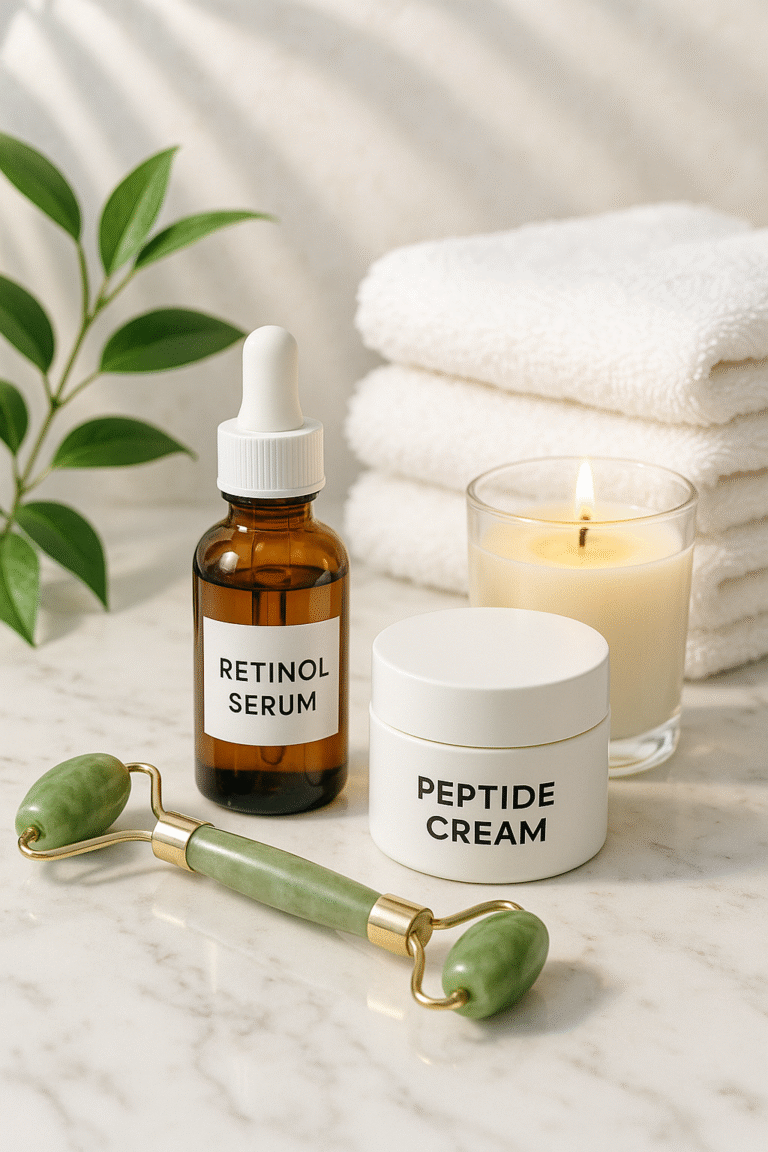
Use serums with niacinamide, retinol (at night only), or peptides for cell renewal.
Step 4: Moisturizer or Overnight Mask
Lock in hydration with ceramides, squalane, or hyaluronic acid.
Step 5: Silk Pillowcase
Prevents friction, irritation, and moisture loss while you sleep.
C. Nutrition and Lifestyle for Better Sleep and Skin
- Eat Magnesium-Rich FoodsAlmonds, spinach, and bananas relax your muscles and help you fall asleep.
- Avoid Sugar Before BedHigh sugar raises cortisol and inflammation, disrupting your sleep cycle.
- Drink Herbal TeaChamomile, valerian, or lemon balm teas calm your nervous system naturally.
- Stay Hydrated During the Day, Not at NightDrinking too much water right before bed can disrupt sleep cycles.
6. Quick Fixes for Sleep-Deprived Mornings
Didn’t get enough rest? Try these morning tricks to revive your skin instantly:
- Cold compress or ice roller — reduces puffiness and boosts circulation.
- Vitamin C serum — brightens dull tone and fights oxidative damage.
- Lightweight moisturizer with caffeine — tightens skin and improves texture.
- SPF 30+ sunscreen — essential, as tired skin is more UV-sensitive.
For an extra boost, massage your face for 2–3 minutes using gentle upward motions — it promotes lymphatic drainage and oxygenation.
7. The Ultimate Takeaway
Beauty sleep is real science, not a myth.
Your skin depends on nighttime rest to renew, hydrate, and repair itself.
When you prioritize 7–9 hours of quality sleep, you’re not just improving your health — you’re investing in younger, glowing skin.
No cream can replace what your body does naturally while you rest. 🌙