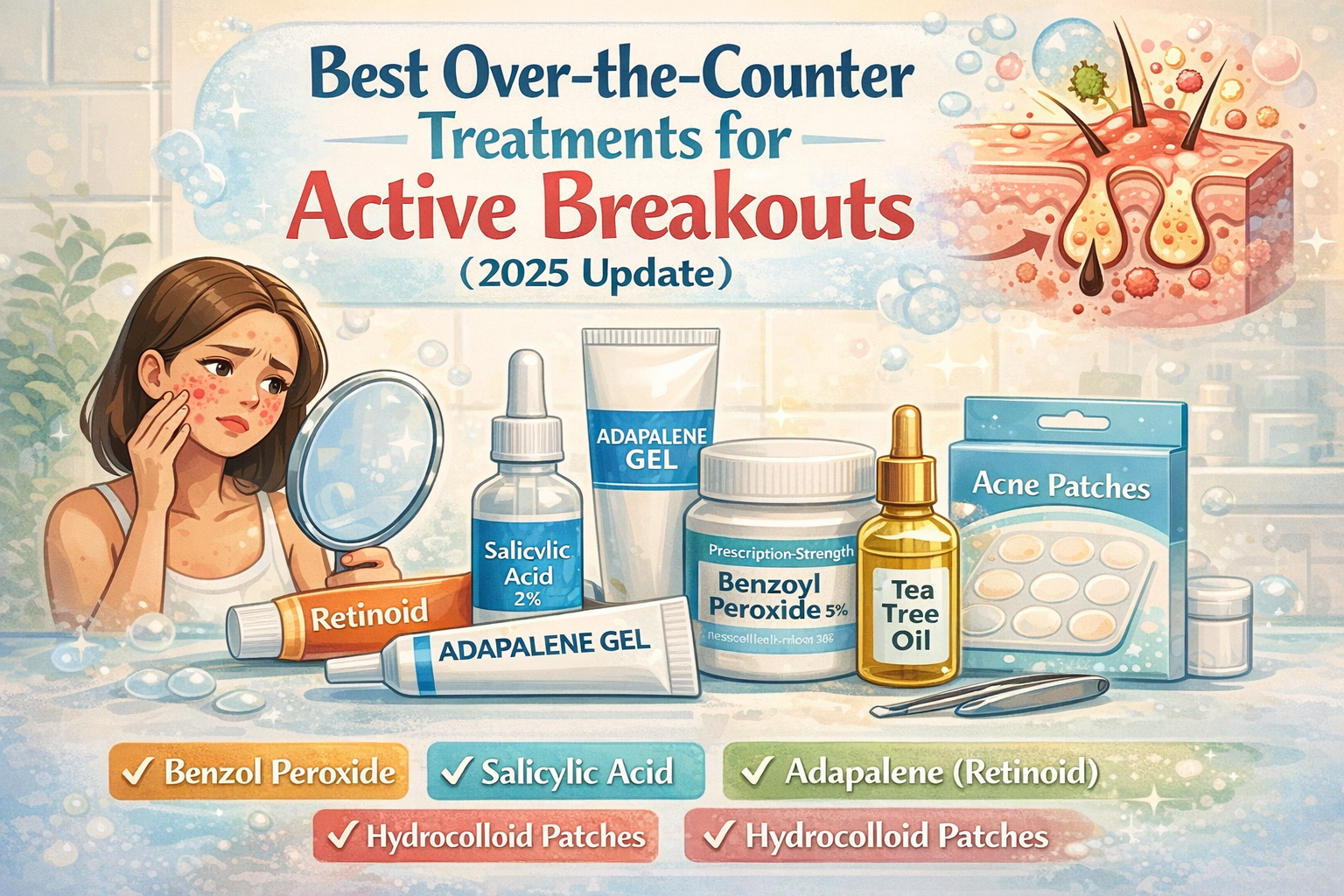
Best Over-the-Counter Treatments for Active Breakouts (2025 Update)
If you’ve ever faced a sudden breakout before an important event, you know how crucial it is to have reliable over-the-counter (OTC) acne treatments that actually work. The good news? Modern skincare offers a range of dermatologist-approved OTC products that can help treat acne quickly, minimize inflammation, and prevent future breakouts — without the need for prescription medication.
This 2025 update highlights the most effective active ingredients and combinations for treating active acne safely and efficiently.
Understanding how OTC acne treatments work
Most OTC acne products target one or more of these mechanisms:
- Reducing oil (sebum) production
- Unclogging pores
- Killing acne-causing bacteria (mainly Cutibacterium acnes)
- Reducing inflammation and redness
- Promoting skin turnover to prevent future clogs
The key to success is choosing the right ingredient (or combination) for your skin type and acne severity.
1. Benzoyl Peroxide (BPO): Fast-acting antibacterial
Why it works: Benzoyl peroxide directly kills acne-causing bacteria and reduces inflammation, making it one of the fastest-working OTC acne treatments available.
Best for:
- Red, inflamed pimples and pustules
- Oily or acne-prone skin
- Preventing antibiotic resistance (can be paired with topical antibiotics under medical supervision)
How to use:
- Start with 2.5% or 5% concentration; higher strengths (10%) may irritate sensitive skin.
- Apply as a spot treatment or thin layer on breakout-prone areas.
- Avoid combining with retinoids in the same routine—alternate days or apply at different times.
Popular 2025 formulations:
- BPO foaming cleansers (e.g., 4% morning wash)
- Leave-on gels with microencapsulation for less irritation
Tip: Always use an old towel and pillowcase—BPO can bleach fabrics.
2. Salicylic Acid (BHA): The pore decongestant
Why it works: Salicylic acid (a beta-hydroxy acid) penetrates deep into pores, dissolving sebum and dead skin that cause blockages. It’s also anti-inflammatory, making it ideal for blackheads and whiteheads.
Best for:
- Blackheads, whiteheads, and mild inflammatory acne
- Oily or combination skin types
- Preventing future breakouts
How to use:
- Use a 0.5–2% leave-on treatment (toner, serum, or gel) once daily or every other day.
- Avoid over-exfoliation—combine with gentle cleansers and barrier-supportive moisturizers.
Pro tip: Salicylic acid pairs well with niacinamide or azelaic acid for balanced, multi-action acne control.
3. Retinoids (Adapalene 0.1%): The cell turnover accelerator
Why it works: Adapalene, a third-generation retinoid available OTC, increases skin cell turnover, prevents clogged pores, and helps reduce acne formation over time.
Best for:
- Persistent, non-inflammatory acne (comedones)
- Long-term maintenance to prevent breakouts
- Improving post-acne marks and texture
How to use:
- Apply a pea-sized amount at night on clean, dry skin.
- Start 2–3 nights per week, increasing frequency gradually.
- Always pair with moisturizer to prevent dryness.
- Sunscreen is non-negotiable when using retinoids.
Expected results: Visible improvement in 8–12 weeks with consistent use.
4. Sulfur & Resorcinol: Gentle yet powerful combo
Why it works: Sulfur helps absorb excess oil, while resorcinol promotes gentle exfoliation and antibacterial protection. The combination is excellent for sensitive or inflamed skin that cannot tolerate stronger actives.
Best for:
- Sensitive or combination skin
- Occasional breakouts and hormonal acne
- Spot treatment use
How to use:
Apply a thin layer to blemishes up to twice daily. Sulfur masks (2–10%) can also calm redness and reduce shine.
5. Niacinamide: The skin barrier ally
Why it works: Niacinamide (vitamin B3) is a versatile ingredient that reduces inflammation, regulates sebum, and strengthens the skin barrier. It’s ideal as a complementary product to stronger actives.
Best for:
- Redness and post-acne irritation
- Supporting barrier repair during active treatment
- Combination with retinoids or acids
How to use:
- 2–5% niacinamide serum daily, AM and/or PM
- Works well under moisturizer and sunscreen
Bonus: It helps fade post-inflammatory hyperpigmentation over time.
6. Azelaic Acid: Dual action for acne and pigmentation
Why it works: Azelaic acid (10–20%) is antibacterial, anti-inflammatory, and helps fade acne marks and hyperpigmentation. It’s well-tolerated and ideal for long-term maintenance.
Best for:
- Acne-prone sensitive skin
- Post-acne dark spots
- Rosacea-prone complexions
How to use:
Apply once or twice daily after cleansing. It’s compatible with most actives, including niacinamide and gentle acids.
7. New OTC ingredients to watch in 2025
Bakuchiol + BHA blends
Natural retinoid alternatives combined with salicylic acid — ideal for beginners or sensitive skin.
Encapsulated retinol night serums
Offer retinoid-level efficacy with fewer side effects thanks to time-release technology.
Probiotic skincare formulations
Help balance the skin microbiome, reducing inflammation and restoring healthy barrier function.
Blue light filters and detox actives
OTC products now target modern triggers like oxidative stress from screens and pollution — especially beneficial for urban users.
Building an effective OTC acne routine
Morning:
- Gentle foaming or gel cleanser
- Niacinamide serum (3–5%)
- Lightweight oil-free moisturizer
- Broad-spectrum sunscreen (SPF 30–50)
Evening:
- Cleanser with BPO or salicylic acid
- Retinoid (adapalene 0.1%) on alternate nights
- Barrier-repair moisturizer
Optional add-ons:
- Azelaic acid serum for pigmentation
- Sulfur spot treatment for inflamed lesions
Avoid: Harsh scrubs, alcohol-based toners, or layering too many actives at once — it can compromise your barrier and worsen acne.
When to seek professional help
If OTC treatments haven’t improved your acne after 12 weeks, or if you have cystic or scarring acne, consult a dermatologist. You may need prescription options like oral medications, stronger retinoids, or hormonal therapy.
Internal links
- Hormonal Acne: Diet, Supplements & Skincare That Help
- Exfoliating Acids: AHA vs. BHA vs. PHA
- How to Repair Your Skin Barrier: Expert Tips That Actually Work
- Best Serums for Acne-Prone Skin: Dermatologist Picks
- Understanding Comedogenic Ratings: What They Mean for Your Skin
- Does Sunscreen Cause Breakouts? Here’s What You Need to Know
Conclusion
Over-the-counter acne treatments have come a long way. With scientifically proven ingredients like benzoyl peroxide, salicylic acid, retinoids, and azelaic acid — plus innovative new blends and barrier-friendly formulations — clear skin is more achievable than ever. The key is patience, consistency, and understanding what your skin truly needs.