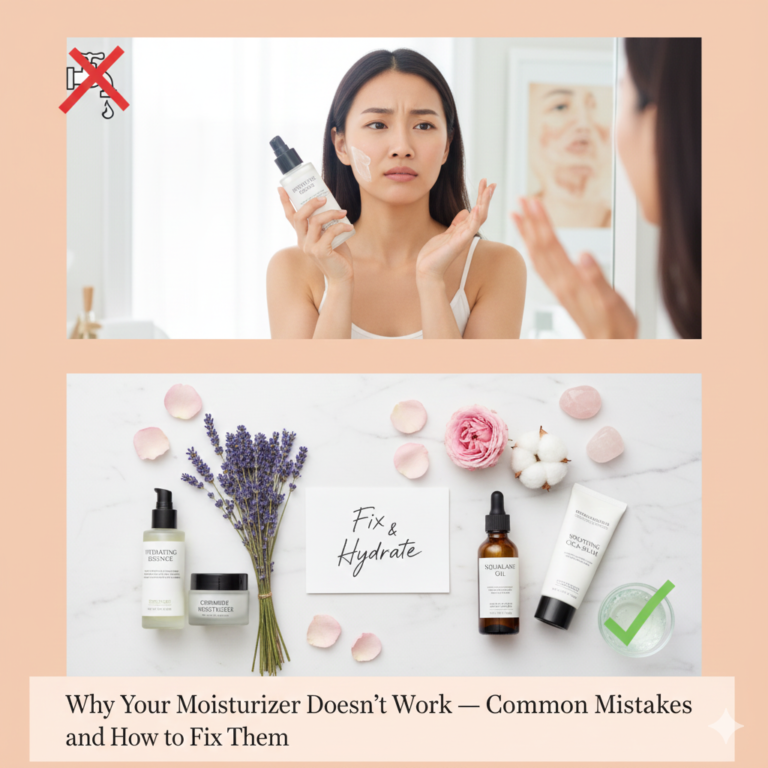
If your skin feels dry, tight, or suddenly reacts to everything — your skin barrier might be damaged.
This delicate outer layer protects you from bacteria, pollution, and moisture loss. When it’s compromised, the result is irritation, sensitivity, and inflammation.
In this article, we’ll explore how to repair your skin barrier fast — using dermatologist-approved methods and product ingredients that truly work.
1. What Is the Skin Barrier and Why It Matters
Your skin barrier — also called the stratum corneum — is made up of lipids, ceramides, and fatty acids.
It acts like a protective wall that keeps hydration in and harmful substances out.
When it’s healthy, your skin looks soft and glowing. When it’s damaged, you’ll notice:
Redness or itching
Tightness and dryness
Flaky or rough texture
Sudden sensitivity to products
2. Common Causes of Barrier Damage
The barrier can break down for many reasons — often from well-intentioned skincare habits:
Over-exfoliating (too frequent acid or scrub use)
Using harsh cleansers that strip natural oils
Mixing too many actives (retinol, AHAs, vitamin C all at once)
Use a thicker occlusive moisturizer — or even a layer of petrolatum (Vaseline) — to seal in hydration. This is known as slugging, and it can dramatically improve recovery overnight.
Acne scars on dark skin can be particularly stubborn due to the way melanin reacts to inflammation. When the skin heals from acne, it can often leave behind hyperpigmentation, which may linger for months or even years. The good news? There are many safe and effective methods to help fade these scars — both at home and through…
Your skin barrier is your body’s first line of defense—protecting you from environmental stressors, bacteria, and water loss. When it’s functioning properly, your skin feels soft, calm, and resilient. But once damaged, the skin becomes sensitive, red, dry, and reactive. A compromised barrier is more common than you think—and often the result of overdoing skincare….
Introduction Hormonal acne can be a stubborn and distressing condition, particularly for adult women. Unlike teenage acne, which often fades with age, hormonal breakouts can persist—or even start—in your 30s, 40s, and beyond. These flare-ups are often tied to menstrual cycles, stress, perimenopause, or conditions like PCOS. Fortunately, there are natural and effective ways to treat hormonal…
Blackheads are one of the most common and stubborn types of acne. They form when sebum and dead skin cells clog a pore and oxidize upon exposure to air, turning dark. While tempting to squeeze or scrub them away, this can lead to irritation, scarring, or even more breakouts. In this expert guide, we’ll explore…
You buy a moisturizer that promises hydration and glow — but your skin still feels dry, tight, or flaky. Sound familiar? The truth is, most people use moisturizers incorrectly, or they pick the wrong type for their skin barrier. If your cream isn’t doing its job, it doesn’t always mean the product is bad. Sometimes, it’s…
Redness, irritation, and discomfort are all too common for people with sensitive skin. Whether caused by environmental triggers, allergic reactions, or improper product use, these symptoms are not only frustrating but often hard to manage without proper guidance. In this expert guide, we’ll explain the main causes of redness and irritation, how to soothe them…